
"with a history of 500 years"
500 article(s) found

Vietnam Morse Coffee introduction, Vietnam Morse Coffee Flavor description
Following Kaiping (official Wechat account vdailycom) found that the beautiful cafe opened a small shop of its own with a coffee planting area of about 500000 hectares in Vietnam, 10% of which belonged to state-owned enterprises and farms, and 85% belonged to farmers and landowners. The scale of the manor is small, usually 2-5 hectares, and the large manor is about 30-50 hectares, but the number is small. Vietnamese coffee is only one of the agricultural products exported from Vietnam.

Growth habits of Coffee
Coffee trees belong to the evergreen family of Akanaceae. They are tropical plants and are not cold-tolerant. Most of them are planted in areas with elevations of 300,400m, and also in highlands with elevations of 2000-2500 meters. But those who plant on slopes above 1500 meters above sea level have better quality. Coffee trees are most suitable for growing at an average temperature of about 20 degrees Celsius and an annual precipitation of 1500-2000 mm.

An introduction to the History of Coffee Flavor in Kogui Kogi Manor (Xuefeng Manor) in Colombia
Columbia Kogi Manor (Xuefeng Manor) "Kogui" can also be used as "Kogi" or "Cogui", which means "Jaguar" in Kogi. The Kogi people originated from American Indian peoples and lived in Sierra Nevada, Santa Marta, in the Sierra Nevada Mountains of Colombia, with a civilization dating back to pre-Columbian times. The Kogi people and their

Introduction to the characteristics of Dominica Santo Domingo coffee flavor varieties with light aroma
In 1677, about 4,000 French lived in 11 villages in the west of the island. In 1697, France and Spain ceded the western part of the island to France according to the Leswick Treaty of the Alliance War, formally recognizing French sovereignty over Haiti in the western part of the Spanish island, and the eastern part of the Spanish island was called East Santo Domingo. France continues to develop its agricultural economy on the island of Hispaniola.
Fine coffee the specification and grade of coffee beans
Small and round dark brown coffee beans, quietly emitting a fragrant fragrance in the grinder, injected into the cup showing the beautiful color of amber, these are the three very deep impressions of coffee. As you explore the history and beauty of coffee, you can also see the coffee trees that are caressed by the tropical sun and whose leaves twinkle. It has small white flowers similar to jasmine.

Fine Coffee Common sense Chinese Herbal Coffee
Coffee is the first of the three major beverages in the world, one of the most important international trade commodities, and also an important raw material for medicine, food and light chemical industry. in history, there was only woody coffee in the world. and mainly produced in Colombia, Brazil, Indonesia and other countries near the equator, only a small amount of woody coffee is grown in subtropical areas such as Hainan and Yunnan, and coffee is not produced in most countries.
Swiss Coffee talks about Culture in elegance
Coffee is no longer a mystery to Chinese people and is accepted by more and more people. In fact, as a basic drink for human beings, coffee has a history of at least 500 years. In the countries of tea culture in Asia, coffee has become more and more important. People often associate coffee with nobility, elegance and nobility to distinguish it from tea. However, Japan has become the second country after the United States and Germany.

Coffee bean specifications and grading skills Coffee basic knowledge
Small and round dark brown coffee beans, quietly emitting a fragrant fragrance in the grinder, injected into the cup showing the beautiful color of amber, these are the three very deep impressions of coffee. As you explore the history and beauty of coffee, you can also see the coffee trees that are caressed by the tropical sun and whose leaves twinkle. It has small white flowers similar to jasmine.

Evaluation of Katim Flavor of Yunnan Coffee
Professional coffee knowledge exchange more coffee bean information please pay attention to the coffee workshop (Wechat official account cafe_style) Coffee tree is a shrub, botanically it belongs to the Rubiaceae family (Rubiaceae) of the genus Coffea, with more than 6000 species belonging to more than 500 genera. Although 25 to 100 of them have been questioned whether they should be included in the Coffea. Most of the raw beans with economic value belong to C. arabic

Is it illegal to bring coffee beans home in Ethiopia?
Follow the caf é (Wechat official account vdailycom) found that the beautiful cafe opened a small shop with raw beans can not be brought, the Chinese customs will unconditionally confiscate, only roasted coffee beans can be carried in the right amount, more or less uncertain, there are no more than 40 packets of 500g, Ethiopia check lax, the key is that domestic customs sometimes more than 10 bags of you to pay duty, Hong Kong again loosely
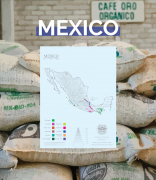
The world's ninth largest coffee exporter-Mexico coffee producing coffee bean characteristics History story
The vast majority (90%) of Mexico's coffee beans are grown in four states in the southern half of the country: Chiapas (44%), Oaxaca (11%), Veracruz (29%) and Puebla (11%)(Source: SIAP 2013). More than 500,000 farmers grow coffee, of which about 70 per cent are smallholders with land of less than 10 hectares. Large estates are rare. Only 0.06 percent.

Standard of classification and classification of coffee beans in Guatemala planting history and different culture
Professional coffee knowledge exchange more coffee bean information please follow the coffee workshop (Wechat official account cafe_style) Front Street-Guatemala grading introduction Guatemala is located in Central America, which is a year-round rainforest weather, high humidity and warm climate country. Guatemala formed Central America with Nicaragua, El Salvador, Honduras, Costa Rica and Panama
Swiss coffee
Coffee is no longer a mystery to Chinese people and is accepted by more and more people. In fact, as a basic drink for human beings, coffee has a history of at least 500 years. In the countries of tea culture in Asia, coffee has become more and more important. People often associate coffee with nobility, elegance and nobility to distinguish it from tea.

El Salvador COE Competition Champion Coffee Bean Manor Podosi History Story Olive Tree Manor Introduction
The coffee industry is crucial to El Salvador's economic growth and is a catalyst for road and rail construction. Although it is less important to today's economy, coffee remains one of its signature crops. Coffee plantations account for 12 per cent of El Salvador's arable land and employ approximately 135,000 workers. Front Street is here to share with you the first coffee plantations from El Salvador.

Introduction of classic European cafes
"if you're depressed, whatever it is, go to the cafe! Your income is only 400 kroner, but you are willing to spend 500 dollars to go to a coffee shop! You hate the people around you and despise the people around you, but you can't do without them. Go to the cafe! "
Growth habits of Coffee trees
Coffee trees belong to the evergreen family of Akanaceae. They are tropical plants and are not cold-tolerant. Most of them are planted in areas with elevations of 300,400m, and also in highlands with elevations of 2000-2500 meters. But those who plant on slopes above 1500 meters above sea level have better quality.

Columbia Linglong Taste and Flavor characteristics-History of Columbia Linglong Coffee producing area
Professional coffee knowledge exchange more coffee bean information Please follow the coffee workshop (Wechat official account cafe_style) Nalinglong micro-batch is the coffee cultivated by the coffee producing areas in the north of Nario province, with its beautiful shape and low defect rate, the raw beans are delicate, small and uniform in size, giving them the name of place of origin. Columbia's exquisite volcanic soil characteristics make
History of Coffee in China the Legend of Coffee in Zhukula Village, Dali, Yunnan
When it comes to the history of Chinese coffee, we have to mention Yunnan Dali Zhukula Coffee, which plays a vital role in the history of Chinese coffee. The ancient coffee forest in Zhukula Village is a unique variety of small-grain coffee in Yunnan. It is very rare and of excellent quality. It can be called a living fossil of Chinese coffee. In today's program, we will explore the century-old coffee legend of Zhukula Village. Zhu
The History of Coffee in China the Biography of Coffee in Zhukula Village, Yunnan Province
When it comes to the history of Chinese coffee, we have to mention Yunnan Dali Zhukula Coffee, which plays a vital role in the history of Chinese coffee. The ancient coffee forest in Zhukula Village is a unique variety of small-grain coffee in Yunnan. It is very rare and of excellent quality. It can be called a living fossil of Chinese coffee. We went to explore the century-old coffee legend of Zhukula village. Zhu Kula, located in Yunnan Province

The award-winning legendary history of Panama Poquete Catowa Estate Coffee
Poquete Cotova Estate Panama Sunburn Geisha Flavor: floral, delicate tropical fruit, honey, caramel, sweet citrus notes, apricot, sweet aftertaste Long-lasting aroma Variety: Geisha Geisha (rose summer) Variety Country: Panama Region: Chirqui Province (Baru Volcano) Poquete Estate: Catova Estate Treatment: Sunburn Treatment Elevation: Elevation